Fotona Laser Treatments for Personalized Skin Care Goals
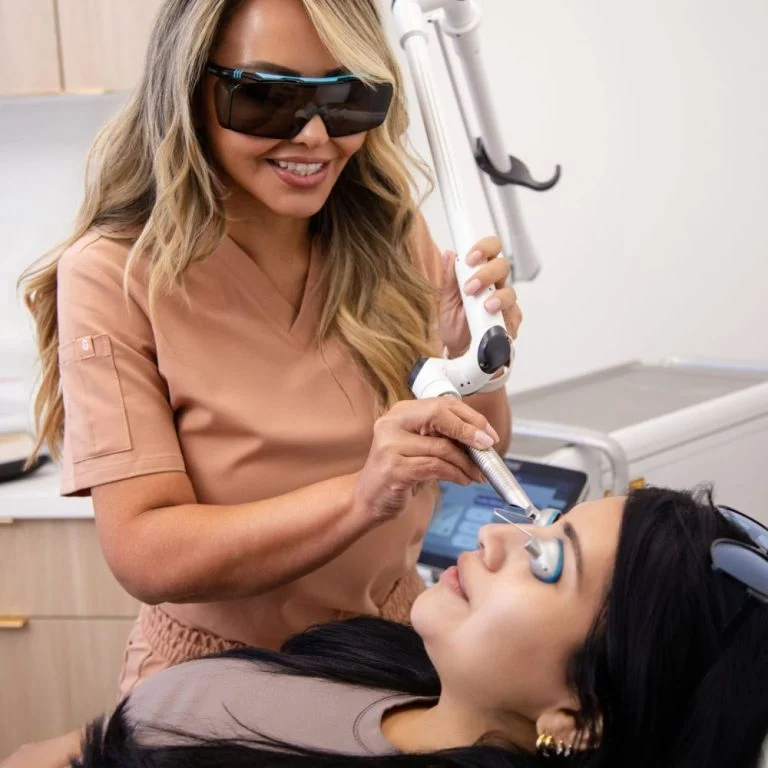
Skin care becomes more complicated the moment a person stops asking for "better skin" and starts asking for something specific. Fewer broken capillaries around the nose. Softer acne scars on the cheeks. Tighter skin along the jawline without surgery. Less flushing. A smoother texture that still looks like real skin and not a polished surface. That is where laser medicine earns its place, not as a one-size-fits-all fix, but as a toolset that can be tuned to a person’s actual priorities.
Fotona Laser Treatments sit squarely in that category. They are often discussed as though they are a single treatment, but in practice, Fotona refers to a platform with different laser wavelengths and treatment modes that can be adapted for several concerns, including pigmentation, vascular redness, texture irregularities, acne, laxity, and some aspects of scarring. The real value is not that the name sounds sophisticated. The value is that the technology allows a clinician to shape a treatment plan around the skin in front of them rather than around a generic menu.
That distinction matters. Two patients can arrive with the same complaint, "my skin looks tired," and need completely different strategies. One may have fine crepey laxity and volume loss. Another may have diffuse redness, enlarged pores, and rough texture from sun damage. If both are pushed into the same treatment simply because it is popular, one will be disappointed and the other may end up irritated without meaningful change. Personalized care is not a luxury phrase in laser practice. It is the difference between a result that looks refined and a result that looks random.
What makes Fotona different in everyday practice
Fotona systems are best known for using Er:YAG and Nd:YAG wavelengths, either separately or in treatment combinations depending on the model and protocol. Those terms sound technical, and they are, but the practical takeaway is easier to understand. Different wavelengths interact with skin in different ways. Some target water in tissue more strongly and are useful for resurfacing and controlled ablation. Others penetrate more deeply and are often used for vascular concerns, collagen remodeling, or bulk heating in deeper layers.
This matters because skin concerns rarely live in just one layer. A person with acne scarring may also have persistent redness, active breakouts, and early laxity. A patient bothered by under-eye crepiness may also have sun texture on the cheeks and fragile capillaries near the nose. A treatment platform that can address surface texture and deeper remodeling gives the provider more room to build a thoughtful sequence rather than forcing everything through one narrow channel.
In clinic settings, that flexibility often shows up in combination protocols. Some practitioners use the phrase "inside out" when discussing certain Fotona approaches, especially when treating tissue laxity in areas like the face, neck, or around the mouth. The point is not marketing flair. The point is that tightening and rejuvenation can be approached from multiple tissue planes, with heat delivered in ways that stimulate remodeling while respecting downtime goals.
Patients usually care less about the wavelength than about three practical questions. How much will it hurt? How long will I look red? Will it actually help my specific issue? Those are the right questions. A good consultation translates the technical aspects into expectations a patient can use.
Personalized goals are more precise than skin type labels
Skin type matters, especially when considering pigment risk, sensitivity, and treatment settings, but it is not the whole story. I have seen patients with similar Fitzpatrick skin types respond very differently because their histories were different. One had years of rosacea and a compromised barrier. Another had resilient skin but significant sun damage from outdoor work. A third had used strong exfoliating products right up until treatment week and arrived inflamed before the laser even touched the skin.
Personalized care starts with understanding the goal behind the goal. If someone asks for brighter skin, does that mean fading brown spots, reducing dull texture, calming redness, or restoring light reflectivity through smoother skin? If someone wants tightening, are they bothered by mild laxity, etched lines around the mouth, heavier tissue along the lower face, or all three? Even the word "scar" can mean very different things. Rolling acne scars, https://remingtonbjch922.raidersfanteamshop.com/fotona-laser-treatments-for-comprehensive-facial-revitalization ice-pick scars, red post-acne marks, and thickened surgical scars do not respond in the same way.
Fotona Laser Treatments can be adapted to many of these issues, but the customization only works when the provider resists the urge to oversimplify. A strong plan often separates what can improve quickly from what requires patience. Redness may calm after a sequence of treatments. Textural remodeling can take months as collagen changes unfold. Deeper scars may soften but not disappear. Patients who understand this from the beginning tend to be far happier because the treatment is tied to realistic, personal benchmarks.
Matching the treatment to the concern
One reason Fotona remains relevant in aesthetic medicine is that it can support very different treatment endpoints. A resurfacing-focused approach aims to improve the skin surface, reducing roughness, superficial lines, and some textural irregularity. A vascular-focused approach may help visible vessels or diffuse redness in select cases. A collagen-stimulating approach can target firmness and skin quality over time. Acne-focused settings may reduce inflammation and oil-related activity for some patients. The treatment feels different depending on the goal, and the downtime profile changes as well.
For fine lines and sun-weathered texture, a resurfacing strategy often makes sense. Here the skin may go through redness, warmth, and a sandpapery recovery phase before revealing a smoother surface. Patients frequently notice the tactile change before they notice the visual change. They wash their face and realize it no longer catches on dry rough patches. Makeup sits better. Light bounces off the skin more evenly. Those small observations often predict the broader improvement that becomes more obvious after healing is complete.
For laxity, the conversation becomes more nuanced. Mild to moderate looseness can respond to collagen stimulation and tissue heating, particularly in patients who are not ready for surgery or do not need it. But a laser does not replace a surgical lift when there is substantial excess skin or deeper structural descent. This is one of the most important judgment calls in cosmetic dermatology and aesthetic medicine. A responsible clinician does not present a laser as a substitute for every level of aging. They explain where the technology shines and where it reaches its ceiling.
For redness and vascular visibility, response can be satisfying but variable. The pattern of redness matters. Fine scattered vessels, background flushing, and rosacea-prone skin are not the same problem, even when they look similar under overhead lighting. Some patients improve beautifully with a vascular-focused laser strategy. Others need a broader plan that includes barrier repair, trigger management, and skin care simplification alongside device treatment.
Acne scarring is another area where personalization matters. Scar type dictates the likely outcome. Broad shallow scars can soften well with resurfacing and remodeling. Deep narrow scars usually need combination approaches and careful expectation setting. Sometimes subcision, peels, injectables, or microneedling are better partners than repeated laser passes alone. The strongest results often come from thoughtful sequencing, not from repeating the same device indefinitely.
Who tends to be a good candidate
A good candidate is not simply someone who can afford treatment or tolerate downtime. Candidacy rests on skin behavior, medical history, timing, and expectations.
- A person with a clearly defined concern, such as texture, redness, mild laxity, or acne-related changes
- Someone willing to follow pre-treatment and aftercare instructions carefully
- A patient with realistic expectations about gradual improvement rather than overnight transformation
- An individual whose recent sun exposure, medications, and skin condition make treatment reasonably safe
- Someone treated by a clinician experienced in selecting parameters for their skin type and concern
That last point deserves emphasis. Lasers are heavily operator dependent. The same platform can produce elegant outcomes or unnecessary complications depending on assessment, settings, overlap, and restraint. Experience shows itself in small decisions, such as knowing when to back off because the skin barrier is irritated, when to divide treatment over multiple visits rather than push too hard in one session, and when to say no because the patient’s goal does not match what the laser can honestly deliver.
Consultation is where personalization really happens
The treatment room gets most of the attention, but the consultation is where the result is quietly won or lost. A thorough consultation should include medical history, past procedures, active skin conditions, scarring tendencies, herpes simplex history when relevant, current retinoid or exfoliant use, pigment concerns, and recent tanning or sun exposure. Photos taken in consistent lighting are more useful than many patients realize. They reveal redness patterns, asymmetry, pigmentation distribution, and baseline texture that memory tends to blur.
This is also the time to discuss lifestyle details that affect recovery. A teacher may prefer a treatment plan with predictable redness that resolves over a long weekend. A bride three weeks from her wedding should not be booked into a more aggressive resurfacing session because she is anxious and wants fast change. A patient training outdoors for a spring marathon may not be an ideal candidate that month if diligent sun avoidance is unlikely. These are not minor scheduling notes. They are risk-management decisions.
A useful consultation also separates "social downtime" from "true healing time." Many patients can resume normal activities before the skin has fully recovered. Redness may fade enough for work within days, while residual sensitivity, dryness, or bronzing can persist longer. If someone hears only the shortest possible downtime estimate, disappointment is almost guaranteed. Precision builds trust.
What treatment day actually feels like
Patients often arrive braced for something far worse than what they experience. The sensation depends on the treatment type and intensity. Some sessions feel like repeated heat with a snapping or prickling element. Others are more uncomfortable and call for stronger numbing support, cooling, or staged passes. A resurfacing-focused treatment generally carries a different sensory profile from deeper non-ablative heating.
The skin may feel hot afterward, similar to a strong sunburn, particularly in the first few hours. Redness is common. Swelling varies by area, with the under-eye region and perioral area often showing more reactivity. If there is an ablative component, the recovery may include a rough or bronzed phase as the skin renews itself. People who have never had a laser sometimes expect the result to appear the next morning. More often, the skin looks worse before it looks better, then settles into a cleaner, more refined appearance over the following days and weeks.
One pattern I have noticed in patient feedback is that people judge treatment too early. Day two is not the verdict. Day five may still be misleading. The skin often needs time for heat-related inflammation to settle and for fresh surface cells to emerge. When collagen stimulation is part of the plan, the meaningful structural changes are slower still.
Downtime is not a minor footnote
Clinics sometimes frame downtime as a simple number, but downtime behaves more like a spectrum. There is visible downtime, tactile downtime, and emotional downtime. Visible downtime is what others can see: redness, swelling, flaking, or bronzing. Tactile downtime is what the patient feels: tightness, tenderness, dryness, sensitivity. Emotional downtime is the period when the patient worries they made a mistake because the skin is mid-heal and temporarily unattractive.
This matters when selecting the intensity of treatment. A patient who can tolerate four days of redness but panics at prolonged flaking may prefer a lower-intensity series over one aggressive session. Another patient may want fewer visits and accept a rougher week if it means a stronger textural reset. Neither approach is inherently better. The right choice depends on temperament, schedule, and goals.
With Fotona Laser Treatments, providers can often tailor the balance between efficacy and recovery by adjusting settings and treatment design. That flexibility is useful, but it should not be mistaken for magic. More aggressive treatment is not always smarter. In reactive or pigment-prone skin, disciplined moderation often outperforms bravado.
Risks, trade-offs, and the importance of restraint
Every laser treatment comes with trade-offs. Temporary redness, swelling, dryness, and discomfort are expected possibilities. More significant risks can include prolonged erythema, post-inflammatory hyperpigmentation, infection, acne flares, delayed healing, and in rare cases scarring. Risk rises when a patient is a poor candidate, aftercare is neglected, recent sun exposure is ignored, or settings are poorly chosen.
Darker skin tones deserve especially careful evaluation because pigmentary complications can be more likely with certain treatment strategies. That does not mean laser treatment is off the table. It means the plan must respect the biology of the skin, the specific device capabilities, and the provider’s experience. Patch testing or conservative treatment may be appropriate in some cases. A trustworthy clinician is not offended by caution.
There is also the trade-off between visible improvement and naturalness. Some patients chase maximal smoothness when the skin really needs balance, not total erasure of every line and pore. Healthy skin still has texture. The best laser outcomes often look like someone slept well for six months and stopped fighting their face, not like someone’s skin was ironed flat.
Pairing laser treatment with the rest of a skin care plan
Laser treatment works best when it is not forced to carry the full burden of skin improvement. The baseline skin care routine matters. So do habits that affect healing, including sun protection, smoking status, sleep, and how faithfully a patient leaves the treated skin alone.
The most successful long-term patients are often not the ones chasing every new treatment. They are the ones who build a steady foundation. A gentle cleanser, an appropriate moisturizer, disciplined sunscreen use, and carefully timed actives do not sound glamorous, but they make laser outcomes more reliable and often longer lasting. If the barrier is chronically irritated, the skin will react more and heal less gracefully. If someone resumes strong acids too soon after treatment because they are impatient, they can sabotage the result.
For patients with pigmentation concerns, sun protection is not negotiable. For rosacea-prone individuals, heat triggers and inflammatory skin care products may matter as much as the laser itself. For acne-prone skin, a maintenance plan helps preserve what the device improves. In other words, personalization does not end when the laser session does.
Practical aftercare that makes a visible difference
Aftercare advice varies by treatment intensity and provider, but the principles are consistent. Treated skin wants calm, hydration, and protection, not experimentation.
- Cleanse gently and avoid scrubbing, rubbing, or exfoliating during the early healing window
- Use the recommended moisturizer regularly to reduce tightness and support barrier recovery
- Avoid direct sun exposure and wear broad-spectrum sunscreen once your provider says it is appropriate
- Pause strong actives, including retinoids and acids, until the skin has clearly settled
- Contact the treating clinic if redness, swelling, oozing, or pain seems to worsen rather than improve
These simple steps sound basic, yet they are where many preventable problems begin. Patients often underestimate how easily friction, heat, or premature exfoliation can prolong recovery. A fresh post-laser face is not the moment for a "deep clean" or a return to every active in the bathroom cabinet.
How many sessions does it usually take?
This is one of the most common questions, and the only honest answer is that it depends on the concern, the treatment intensity, and how high the patient’s expectations sit. Some people see a noticeable improvement after one session, particularly with certain resurfacing or rejuvenation approaches. Others need a series to build change gradually. Acne scars, redness patterns, and laxity frequently respond best over multiple visits spaced weeks apart.
There is a practical reason experienced providers often prefer a series for certain goals. Skin reveals its response over time. A conservative first treatment can show how reactive the patient is, how they heal, and whether the chosen endpoint is moving the needle. That information helps refine later sessions. This is especially important in patients with sensitive skin, rosacea tendencies, or a history of post-inflammatory pigmentation.
It is also worth noting that maintenance is a normal part of aesthetic medicine. Skin continues to age, accumulate sun exposure, and respond to hormones, stress, and environment. A treatment course is not a permanent state. Patients do best when they understand this as upkeep rather than failure.
Cost is part of personalization too
Budget influences treatment planning more than many clinics openly acknowledge. A patient with a generous budget may do well with a staged combination plan across several months. Another may need to prioritize one chief complaint and tackle the rest later. That is not a lesser version of care. It is often the wiser one.
The problem arises when financial limits are ignored and a person is sold a large package that leaves them resentful or unable to complete the recommended course. In real practice, it is better to make one smart choice than to start five treatments and abandon them halfway. If redness bothers a patient every day and mild texture only occasionally, targeting redness first may provide the greatest quality-of-life return.
Transparent planning helps here. Patients should understand whether the quoted fee covers one treatment, a series, consultation, topical anesthesia, follow-up, and any adjunctive products. Surprises erode trust faster than almost anything else in cosmetic care.
The value of choosing a provider, not just a device
A common mistake is shopping for a machine name rather than for clinical judgment. The same brand in different hands can lead to very different experiences. Good providers know the device, but they also know when not to use it, when to combine it, and when to refer elsewhere. That level of judgment is what patients are actually paying for.
During a consultation, the useful signs are rarely flashy. They show up in the questions asked, the willingness to discuss downsides, the clarity around downtime, and the honesty about limitations. If a clinician claims the treatment will fix every concern at once with virtually no recovery, skepticism is healthy. If they can explain what they expect to improve first, what may improve only modestly, and what might need another modality entirely, that is usually a better sign.
Fotona Laser Treatments can be a strong option for patients who want a customized approach to skin quality, redness, texture, acne-related concerns, or mild laxity. Their strength lies less in branding and more in versatility. Still, versatility only becomes value when it is matched to the right patient, the right timing, and the right plan. Personalized skin care goals deserve that level of care, because skin rarely asks for a generic answer, and it almost never rewards one.
OMNIA Wellness Center
Address: 16430 Ventura Blvd Ste 207, Encino, CA 91436
Phone number: +18183868511
FAQ About Fotona Laser Treatments
What is a Fotona laser good for?
A Fotona Laser system is a versatile, dual-wavelength medical laser used primarily for non-surgical skin tightening, anti-aging rejuvenation, and dermatological treatments.
How much does the Fotona laser cost?
The cost of a Fotona laser depends heavily on whether you are looking to purchase a laser machine for a medical practice or are a patient seeking a laser treatment at a medspa.
Is a Fotona laser worth it?
A Fotona laser treatment is generally worth it if you want non-surgical skin tightening, improved texture, and collagen stimulation with very little downtime.